
Compliance & Regulations
Find Machine Guarding Violations Before OSHA Does: AI-Powered Hazard Detection
OSHA issued $9.4 million in fines for machine guarding violations in 2025. Learn how SoterAI's Hazard Identification Workflow uses AI to detect missing guards and 1910.212(a)(1) compliance issues before inspectors arrive at your facility.
By Matthew Hart
CEO
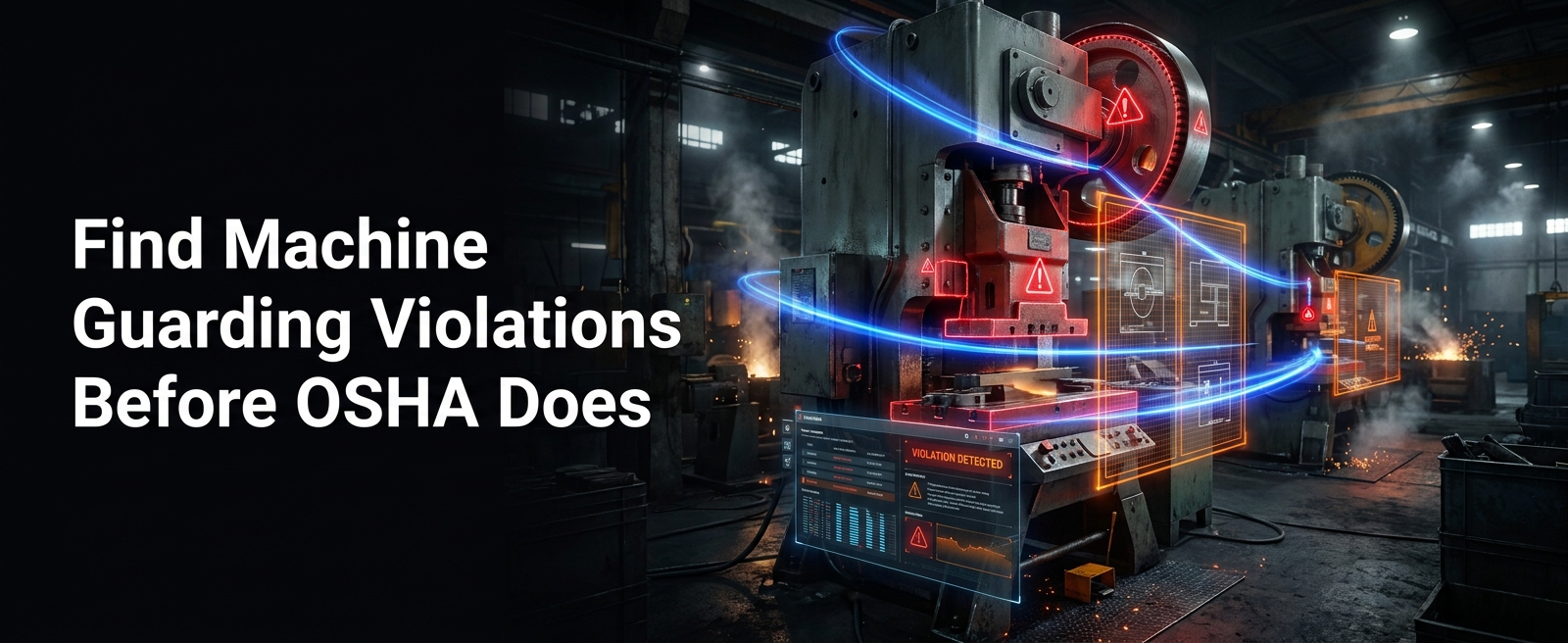
Machine guarding violations represent one of the most frequently cited OSHA violations year after year. In 2025 alone, OSHA issued citations totaling $9,375,065 for violations of machine guarding standards. These aren't just statistics—they represent preventable amputations, crush injuries, and fatalities that occur when machinery lacks proper safeguarding.
The challenge isn't that safety managers don't care about machine guarding. It's that identifying every missing guard across a sprawling facility with hundreds of machines is nearly impossible using manual inspection methods. Until now.
$9.4 Million in OSHA Fines (2025)
Organizations paid $9,375,065 in penalties for machine guarding violations in 2025. Each citation averages between $15,625 and $156,259 depending on severity, not counting the cost of injuries, production downtime, and reputation damage.
See How It Works
Watch SoterAI identify real machine guarding violations with detailed regulatory analysis
↓ Jump to real violation examples detected by AI
Understanding OSHA 1910.212(a)(1): Machine Guarding Requirements
OSHA standard 1910.212(a)(1) establishes the fundamental requirement for machine guarding in general industry. The regulation is deceptively simple but critically important:
OSHA 1910.212(a)(1) - General requirement for all machines
“One or more methods of machine guarding shall be provided to protect the operator and other employees in the machine area from hazards such as those created by point of operation, ingoing nip points, rotating parts, flying chips and sparks.”
Types of guarding shall be determined by risk assessment and shall include barrier guards, two-hand controls, electronic safety devices, or other effective means that prevent employees from having any part of their bodies in the danger zone during the operating cycle.
The regulation requires employers to assess each machine for hazards and implement appropriate safeguards. This applies to:
- Point of operation: The area where work is performed on material (cutting, shaping, boring, forming)
- Power transmission apparatus: Flywheels, pulleys, belts, chains, couplings, and connecting rods
- Rotating parts: Any rotating component that could catch clothing, hair, or body parts
- Nip points: Where two rotating parts come together (gears, rollers, belt and pulley systems)
Why Machine Guarding Violations Are So Common
Machine guarding violations persist for several interconnected reasons that compound over time:
Guards Removed for Maintenance
Production pressure leads operators to remove guards for quicker access during changeovers or jams, then forget to reinstall them properly.
Modifications Over Time
Equipment modifications, retrofits, and process changes can create new hazard points that weren't present in the original risk assessment.
Scale of the Challenge
Large facilities may have hundreds or thousands of machines. Manual inspection programs struggle to maintain consistent coverage across all equipment.
Inspection Blind Spots
Safety managers can't be everywhere at once. Traditional inspection schedules may miss hazards that appear between scheduled audits.
The Real Cost of Machine Guarding Violations
The $9.4 million in OSHA penalties represents only a fraction of the true cost organizations pay for inadequate machine guarding:
Cost Breakdown: Single Amputation Injury
OSHA Citation (Serious Violation)
1910.212(a)(1) - Missing guard
$15,625
Workers' Compensation Claims
Medical treatment, lost wages, permanent disability
$250,000+
Production Downtime
Incident investigation, equipment inspection, OSHA inspection
$85,000
Legal Fees and Settlements
Defense costs, potential civil litigation
$150,000+
Total Potential Cost
Not including reputation damage, insurance increases
$500,625+
How SoterAI's Hazard Identification Workflow Detects Guarding Issues
SoterAI's Hazard Identification Workflow transforms how organizations approach machine guarding compliance. Instead of relying on periodic manual inspections that may occur monthly or quarterly, the system enables continuous monitoring using computer vision and AI trained specifically on industrial safety hazards.
Proactive vs. Reactive Detection
Traditional safety inspections are reactive—they find problems after they've existed for days, weeks, or months. SoterAI's approach is proactive, identifying missing guards and hazards in real-time before they result in injuries or OSHA citations.
The Three-Step Process
Capture
Take photos of machinery during routine walkthroughs using any smartphone camera.
Analyze
AI instantly identifies missing guards, exposed hazards, and compliance issues.
Act
Receive detailed reports with hazard severity, corrective actions, and compliance citations.
Real-World Detection Examples
Here are three common machine guarding violations that SoterAI's Hazard Identification Workflow successfully identifies in manufacturing facilities:
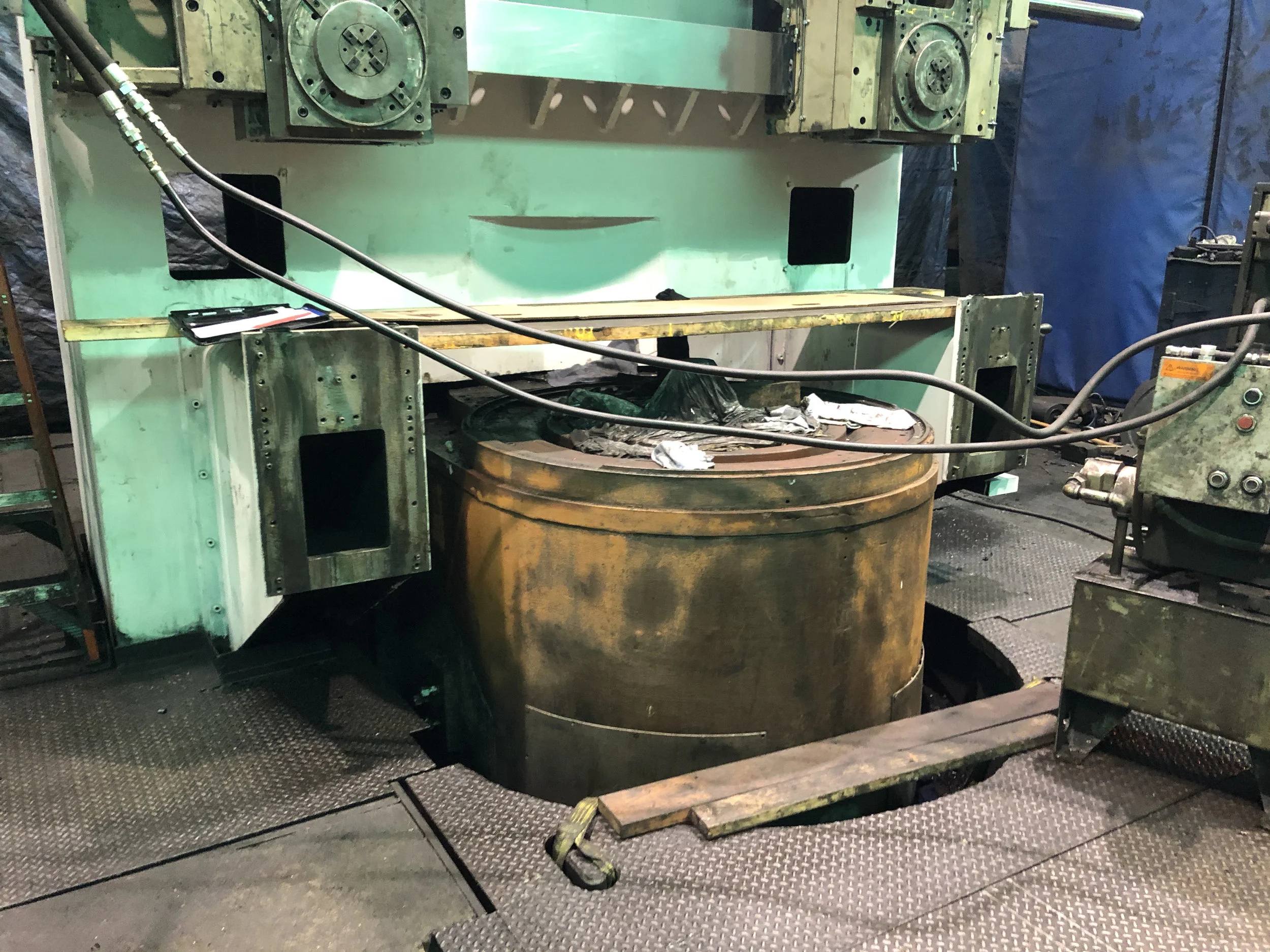
Unguarded press point of operation and in-going hazards
| Field | Value |
|---|---|
| Observation | Large press with a central cylindrical workpiece/drum under the upper platen; no physical guards, gates, or presence-sensing devices visible at the hazard zone. |
| Presence | Present – The main working area under the press head is fully open where an operator would load/unload parts. |
| Regulatory Code(s) | 29 CFR 1910.212 – General requirements for all machines |
| Regulatory Requirements | §1910.212(a)(1) requires one or more methods of machine guarding to protect employees in the machine area from hazards such as point of operation, in-going nip points, and rotating parts, using methods like barrier guards or two-hand controls. |
| Evaluation | The press point of operation and adjacent moving parts appear completely unguarded, exposing employees to severe crushing and amputation hazards when the press cycles or parts shift. |
| Compliance | Violated – No guarding or safeguarding devices are visible that would prevent body parts from entering the danger zone during operation. |
| Potential Cost | Up to about $16,550 per serious violation; up to about $165,514 per willful/repeated violation under 29 CFR 1903.15. |
Corrective Actions:
- •Install fixed barrier guards, interlocked gates, light curtains, or two-hand controls that prevent access to the point of operation while the press can cycle.
- •Conduct a formal machine-specific risk assessment and retrofit guarding in accordance with applicable consensus standards.
- •Train operators and maintenance staff on safe operation and the purpose and proper use of all guarding and safety devices.

Unguarded rotating milling cutter and point of operation
| Field | Value |
|---|---|
| Observation | A multi-insert face milling cutter is rotating above a clamped workpiece with no visible fixed guard, shield, or enclosure around the cutting area. |
| Presence | Present – the cutter and point of operation are clearly exposed directly above the workpiece in the vise. |
| Regulatory Code(s) | 29 CFR 1910.212 – General requirements for all machines |
| Regulatory Requirements | 1910.212(a)(1) requires one or more methods of machine guarding to protect employees from hazards such as point of operation, ingoing nip points, rotating parts, flying chips and sparks. |
| Evaluation | The cutting tool and point of operation are fully exposed with no shield or enclosure, leaving operators vulnerable to contact and flying chips, which does not meet the requirement for guarding against rotating parts and flying chips. |
| Compliance | Violated – absence of any visible guard around the cutter and work area conflicts with 1910.212(a)(1). |
| Potential Cost | OSHA serious violation penalties can be up to tens of thousands of dollars per violation; exact amount varies by case and year (see OSHA penalty schedule on osha.gov). |
Corrective Actions:
- •Install appropriate machine guarding such as fixed or adjustable chip shields, interlocked enclosures, or barrier guards around the cutter and point of operation.
- •Ensure guards are designed so that hands and other body parts cannot enter the danger zone during operation while still allowing necessary visibility.
- •Develop and enforce procedures requiring guards to be in place and properly adjusted before starting the machine.
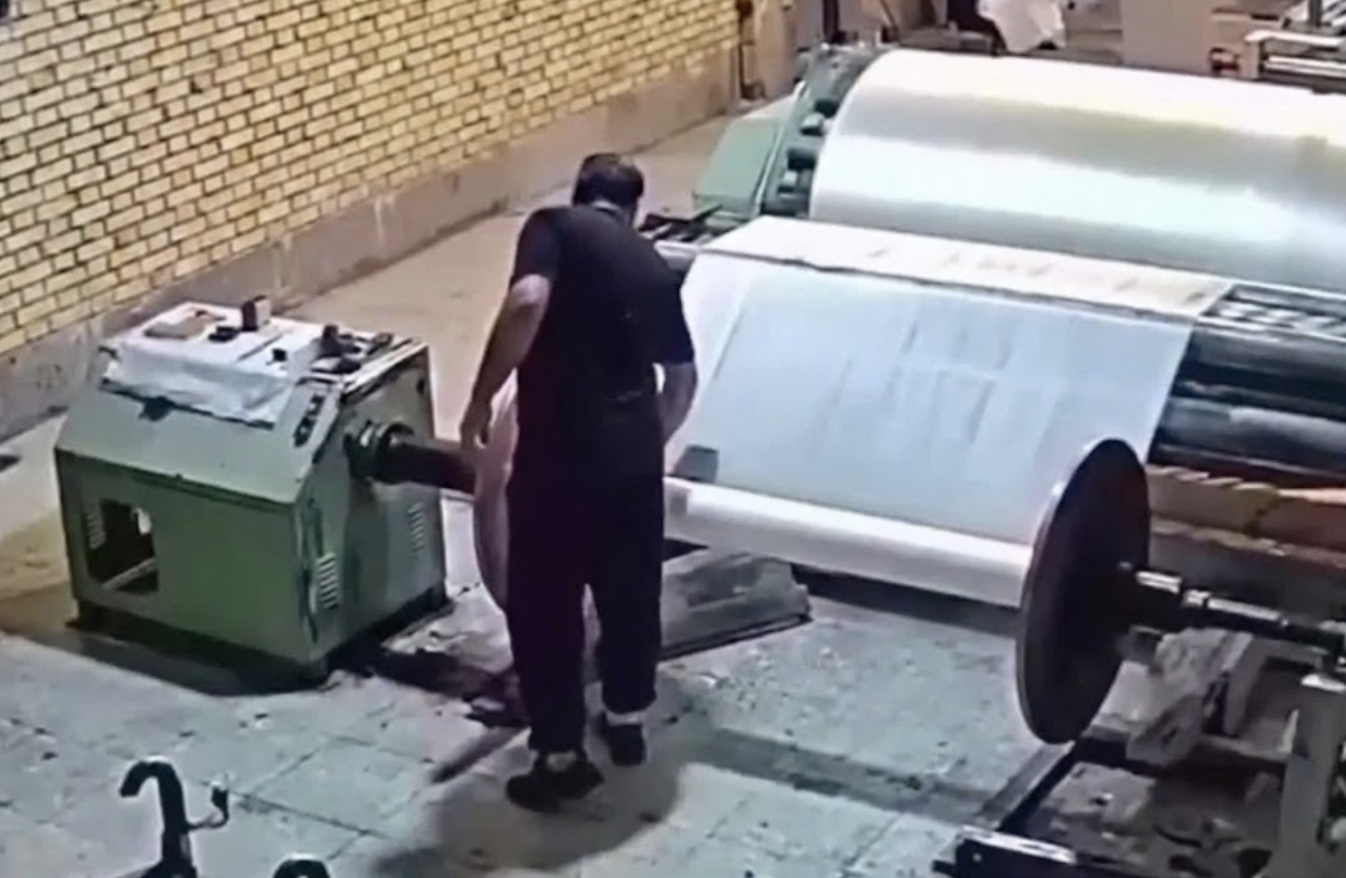
Exposed rotating shaft / power-transmission apparatus
| Field | Value |
|---|---|
| Observation | A large horizontal shaft protrudes from a drive unit with no guard or enclosure, fully exposed where the worker can contact or become entangled. |
| Presence | Present – The rotating/power-transmission shaft is clearly visible and unguarded in the image. |
| Regulatory Code(s) | 29 CFR 1910.219 |
| Regulatory Requirements | §1910.219(b) and (c) require flywheels, shafts, pulleys and other mechanical power-transmission apparatus to be guarded, e.g., with enclosures or guards so employees cannot contact rotating parts. |
| Evaluation | The shaft is not enclosed or guarded and is within normal reach of the operator, directly contradicting requirements that rotating shafts and similar power-transmission components be guarded. |
| Compliance | Violated – Required guarding is absent where employees are exposed to rotating mechanical power-transmission parts. |
| Potential Cost | Up to ~$16,131 per serious violation; up to ~$161,323 per willful/repeated violation (OSHA 2024 penalty adjustments). |
Corrective Actions:
- •Install fixed guards or fully enclosed housings over the protruding shaft and any associated couplings as specified in 1910.219.
- •Configure guards so they prevent contact yet allow necessary operation and maintenance (e.g., removable/interlocked guards where access is required).
- •Incorporate guarding inspection into preventive maintenance and pre-use checks.
Benefits Beyond Compliance
While OSHA compliance is critical, organizations implementing SoterAI's Hazard Identification Workflow discover benefits that extend far beyond avoiding citations:
Injury Prevention
Early detection of missing guards prevents catastrophic injuries. Organizations report 40-60% reductions in machine-related incidents within the first year of implementation.
Inspection Efficiency
Safety managers report 70% time savings on facility inspections. AI handles the tedious visual inspection work, allowing human experts to focus on complex risk assessments and corrective action implementation.
Documentation for OSHA Inspections
Timestamped photos and AI-generated reports create a comprehensive audit trail demonstrating your organization's commitment to proactive hazard identification—powerful evidence during OSHA inspections.
Continuous Improvement Data
Trend analysis reveals patterns: which machines frequently lose guards, which shifts have the highest violation rates, which areas need process improvements. Data drives targeted interventions.
Getting Started with Hazard Identification
Implementing SoterAI's Hazard Identification Workflow requires no specialized hardware, lengthy training programs, or operational disruption. Organizations typically follow this implementation path:
Typical Implementation Timeline
Pilot Program Setup
Select a single production area with 20-50 machines. Onboard 2-3 safety team members to the platform. Conduct initial facility walkthrough capturing baseline photos.
Hazard Resolution Sprint
Address high-severity findings identified during baseline assessment. Install missing guards, repair damaged barriers, correct maintenance procedures. Document all corrective actions.
Ongoing Monitoring
Establish routine inspection schedule (weekly recommended). Integrate findings into existing corrective action tracking systems. Train supervisors and operators on the workflow.
Facility-Wide Expansion
Roll out successful pilot program to additional production areas. Analyze trend data to identify systemic issues. Refine maintenance procedures based on insights.
Find Hazards Before They Find You
The $9.4 million in OSHA penalties issued in 2025 for machine guarding violations represents avoidable costs that organizations paid because hazards went undetected until inspectors arrived. Every citation represents a failure in the organization's hazard identification process—a guard that was removed and not reinstalled, a modification that created new exposure, an inspection program that missed critical equipment.
SoterAI's Hazard Identification Workflow changes this equation. By deploying AI-powered computer vision trained specifically on industrial safety hazards, organizations gain the capability to continuously monitor their facilities at a scale impossible with traditional manual inspection methods. The result: hazards detected and corrected before they result in injuries, production disruption, or costly OSHA citations.
Ready to Strengthen Your Machine Guarding Program?
Discover how SoterAI's Hazard Identification Workflow can help you detect missing guards and compliance issues before OSHA inspectors arrive. Schedule a demonstration to see the AI analyze your actual facility photos.