
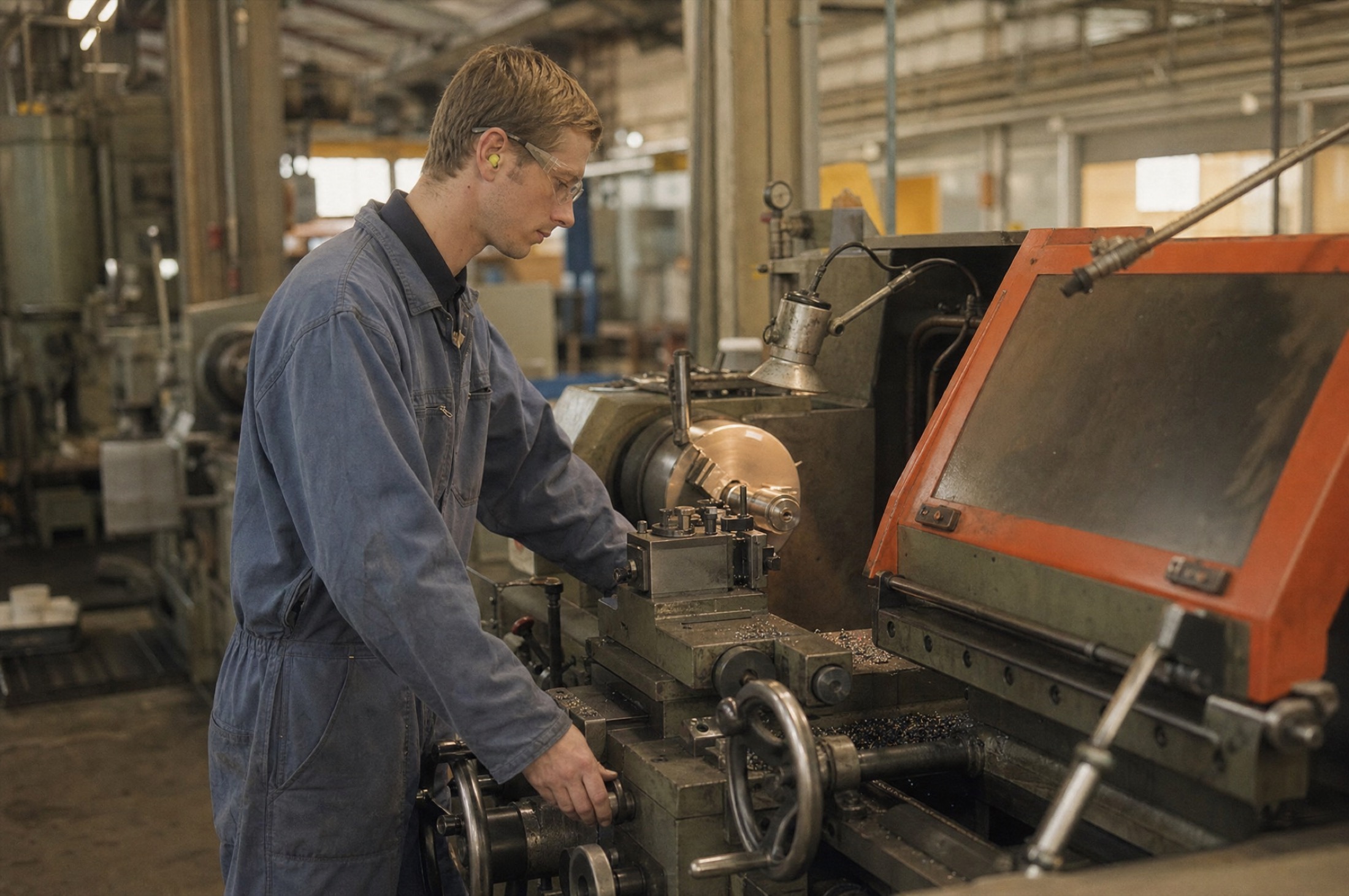
The hazards-to-controls layer for manufacturing safety teams
Manufacturing EHS managers log 20+ hours a week on inspections, incident paperwork, and ergonomic assessments. Soter turns each hazard into a closed control, assigned and dated, inside one system, so safety work moves from capture to verified follow-up.
70%
Admin workload reduction
$40K+
Avg. cost per recordable injury
30%
MSD share of manufacturing injuries
$50K+
Net ROI in year 1
The Challenge
Why Manufacturing Safety Is
$40,000+
per recordable injury
Reactive, Not Proactive
You spend so much time investigating incidents, filling out OSHA logs, and writing reports that you have no time to identify hazards before someone gets hurt.
Real Impact
Every recordable injury costs $40,000+ in direct costs, plus lost productivity, OSHA scrutiny, and increased insurance premiums.
$50,000+
avg MSD claim cost
Ergonomic Injuries Are Silent Killers
MSDs account for 30% of manufacturing injuries, but they're hard to spot until workers are already hurt. Traditional ergonomic assessments take 3-4 hours per task.
Real Impact
The average MSD claim costs $50,000+ and results in 12+ days away from work.
$8,000+
per LOTO citation
Complex Machinery = Complex Compliance
Machine guarding, lockout/tagout, electrical safety, chemical handling - you're juggling dozens of OSHA standards across hundreds of pieces of equipment.
Real Impact
OSHA 1910.147 (LOTO) violations average $8,000+ per citation and are among the most frequently cited standards.
Multi-Site Inconsistency
You manage safety across 3, 5, or 10 facilities. Each plant has different processes, different hazards, and different levels of safety culture.
Real Impact
Inconsistent programs mean you can't identify company-wide trends or share best practices across facilities.
Data Trapped in Spreadsheets
Your incident data is in Excel. Inspection checklists are on paper. Training records in another system. You can't see patterns or prove ROI.
Real Impact
You're making safety decisions based on gut feel, not data - and leadership doesn't see the value of your safety investments.
3x
higher injury rate, first 90 days
High Turnover = Constant Training
Manufacturing turnover rates hit 30-40% annually. You're constantly training new workers on safety protocols, but they're getting hurt before they build safe habits.
Real Impact
New hires in their first 90 days have 3x higher injury rates. Training costs combined with injury costs create unsustainable safety expenses.
How it works
Every hazard moves from capture to closed control.
Capture
Photo, voice, or video. The hazard is logged in seconds.
Assign control
Every hazard gets an owner and a due date.
Verify follow-up
Closed, dated, and audit-ready.
Built for Manufacturing
AI-Powered Safety Management
Identify Every Hazard in Half the Time
Old Way
Plant inspections take 2-3 hours, and you're never sure if you caught everything. Writing up findings takes even longer.
3 hrs → 45 min
inspection time
SoterAI
Upload 20-50 photos from your plant walk or a 6-minute video. AI identifies machine guarding issues, PPE violations, housekeeping hazards, electrical problems, and more. Comprehensive, categorized report in minutes.
3 hrs to 45 min
Inspection time
8 categories
AI hazard detection
Included
Auto OSHA references
Platform
Built for Manufacturing,
Risk Intelligence
AI built from your historical incident, control, and hazard documentation. Not generic AI, but AI that understands the history and risk profile of your specific plant. Helps safety professionals answer the fundamental question: are our controls adequate, verified, and effective?
- Learns from your incident history, not generic training data
- Surfaces risk patterns across departments and shifts
- Controls: adequate, verified, and effective
Connected to Your Stack
Connects to ERP, HRIS, EHS, and operational systems through API access and customer-specific integrations where your stack supports it. SoterAI is designed to use business context instead of acting as a siloed tool.
- API integrations with ERP, HRIS, and EHS systems
- Business context instead of siloed tooling
- Customer-specific integration support
Conversational + Multimodal Capture
Talk to SoterAI, upload photos and videos, or chat through findings. The AI structures the record. The form becomes a review step before submission, not the data-entry method. Two-way coaching asks follow-up questions to capture richer data.
- Voice, photo, and video capture — all modalities
- AI structures the record; form becomes a review step
- Two-way coaching for richer data
Built for the Plant Floor
Photo, voice, and video capture from any phone. Works with gloves on. AI asks the right follow-up questions and nothing gets missed.
- Works from any phone, gloves on
- AI prompts the right follow-up questions
- Nothing missed — complete capture every time
30+
pre-built workflows
Pre-Built Manufacturing Workflows
30+ workflows for inspections, ergonomic assessments, LOTO procedures, incident reports, JSAs, and more.
- Inspections, ergonomic assessments, LOTO procedures
- Incident reports, JSAs, toolbox talks
- Deploy immediately — no configuration required
OSHA 1910 Compliance
Auto-references manufacturing-specific OSHA standards. Machine guarding, LOTO, electrical, chemical, and more.
- Auto-references OSHA 1910 in every report
- Machine guarding, LOTO, electrical, chemical standards
- Jurisdiction-specific citations included
Multi-Facility Dashboards
Real-time visibility across all plants. Track incident rates, inspection completion, and safety culture metrics.
- Real-time visibility across all plants
- Track incident rates and inspection completion
- Safety culture metrics and facility benchmarking
Automatic Classification
AI classifies incidents by type, severity, and OSHA recordability. Populates your OSHA 300 log automatically.
- Classifies by type, severity, and OSHA recordability
- Auto-populates your OSHA 300 log
- Consistent classification across all sites
Compliance
Manufacturing-Specific Regulations
SoterAI automatically references manufacturing-specific OSHA standards in every report and includes 30+ pre-built workflows for manufacturing operations.
Regulations Covered
OSHA 1910
General Industry Standards
1910.147
Lockout/Tagout (LOTO)
1910.212
Machine Guarding
1910.1200
Hazard Communication
1910.134
Respiratory Protection
1910.305
Electrical Safety
1910.119
Process Safety Management
1910.146
Confined Space Entry
Pre-Built Workflows
Comparison
SoterAI vs. Traditional Manufacturing Safety Software
Capability
Paper / Spreadsheets
Traditional EHS Software
SoterAI
Plant inspections
3 hours with clipboard2 hours typing into forms45 min - photos + AI analysisErgonomic assessments
3-4 hours per taskNot available15 min - video + AI REBA scoringIncident trend analysis
4-5 hours in ExcelBasic reports15 min - AI identifies patternsLOTO procedures
Word docs, file cabinetsStatic templatesAI-generated, photo verificationMulti-site visibility
Phone calls, emailsSeparate dashboards per siteOne dashboard, all facilitiesPhoto analysis
Attach manuallyUpload one at a timeAI analyzes and extracts hazardsPlant inspections
Paper / Spreadsheets
3 hours with clipboard
Traditional EHS Software
2 hours typing into forms
SoterAI
45 min - photos + AI analysis
Ergonomic assessments
Paper / Spreadsheets
3-4 hours per task
Traditional EHS Software
Not available
SoterAI
15 min - video + AI REBA scoring
Incident trend analysis
Paper / Spreadsheets
4-5 hours in Excel
Traditional EHS Software
Basic reports
SoterAI
15 min - AI identifies patterns
LOTO procedures
Paper / Spreadsheets
Word docs, file cabinets
Traditional EHS Software
Static templates
SoterAI
AI-generated, photo verification
Multi-site visibility
Paper / Spreadsheets
Phone calls, emails
Traditional EHS Software
Separate dashboards per site
SoterAI
One dashboard, all facilities
Photo analysis
Paper / Spreadsheets
Attach manually
Traditional EHS Software
Upload one at a time
SoterAI
AI analyzes and extracts hazards
Results
Manufacturing Companies
"The WHS team drastically reduced the time spent on compliance checks, risk assessments, and preparing training materials. We've cut admin workload by 70%, which means more time actually talking to workers and preventing incidents."
Admin workload reduction
70%
70% reduction in administrative workload
ROI
The Business Case for
ROI scenario for a 200-employee manufacturing facility
Current Annual Costs
Amount
Safety admin time (20 hrs/wk x $50/hr x 52 wks)
$52,000
Recordable injuries (4/yr x $40,000)
$160,000
OSHA violations (1-2/yr x $8,000)
$16,000
Total Annual Costs
~$228,000
Annual Savings with SoterAI
Saved
Cut admin time by 50%
$26,000
Reduce injuries by 30%
$48,000
Avoid 1 OSHA violation
$8,000
Total Annual Savings
$82,000
SoterAI annual cost
$20,000-$30,000
Payback period
3-4 months
Net ROI (Year 1)
$50,000+
After SoterAI platform cost. For a 200-employee manufacturing facility.
FAQ
Frequently Asked Questions
Does this work for discrete manufacturing and process manufacturing?
Yes. SoterAI works for assembly operations, machining, food processing, chemical manufacturing, automotive, electronics, and any other manufacturing environment.
Can we customize workflows for our specific processes?
Absolutely. Use our AI builder to create custom inspection checklists, JSA templates, and incident forms specific to your operations. No coding required.
How does the ergonomic assessment work?
Record a short video (30-60 seconds) of the work task. AI analyzes movement frame-by-frame, calculates REBA scores, and provides specific recommendations to reduce MSD risk.
Can we manage safety across multiple facilities?
Yes. SoterAI provides real-time visibility across all your facilities with standardized workflows and cross-site trend analysis. Multi-site rollouts run across 50+ locations.
Does this integrate with our existing ERP or HRIS?
SoterAI can connect to ERP, HRIS, EHS, and operational systems through API access and custom integrations where the customer stack supports it. We work with your IT team to determine the right integration path for your specific environment.
Ready to move manufacturing safety from capture to closed controls?
Run one site first, verify that hazards get owners and due dates, then expand the workflow across lines, shifts, and facilities.